
Cosmetic-grade biochar · Charcoal Powder
The charcoal ingredient with a traceable origin.
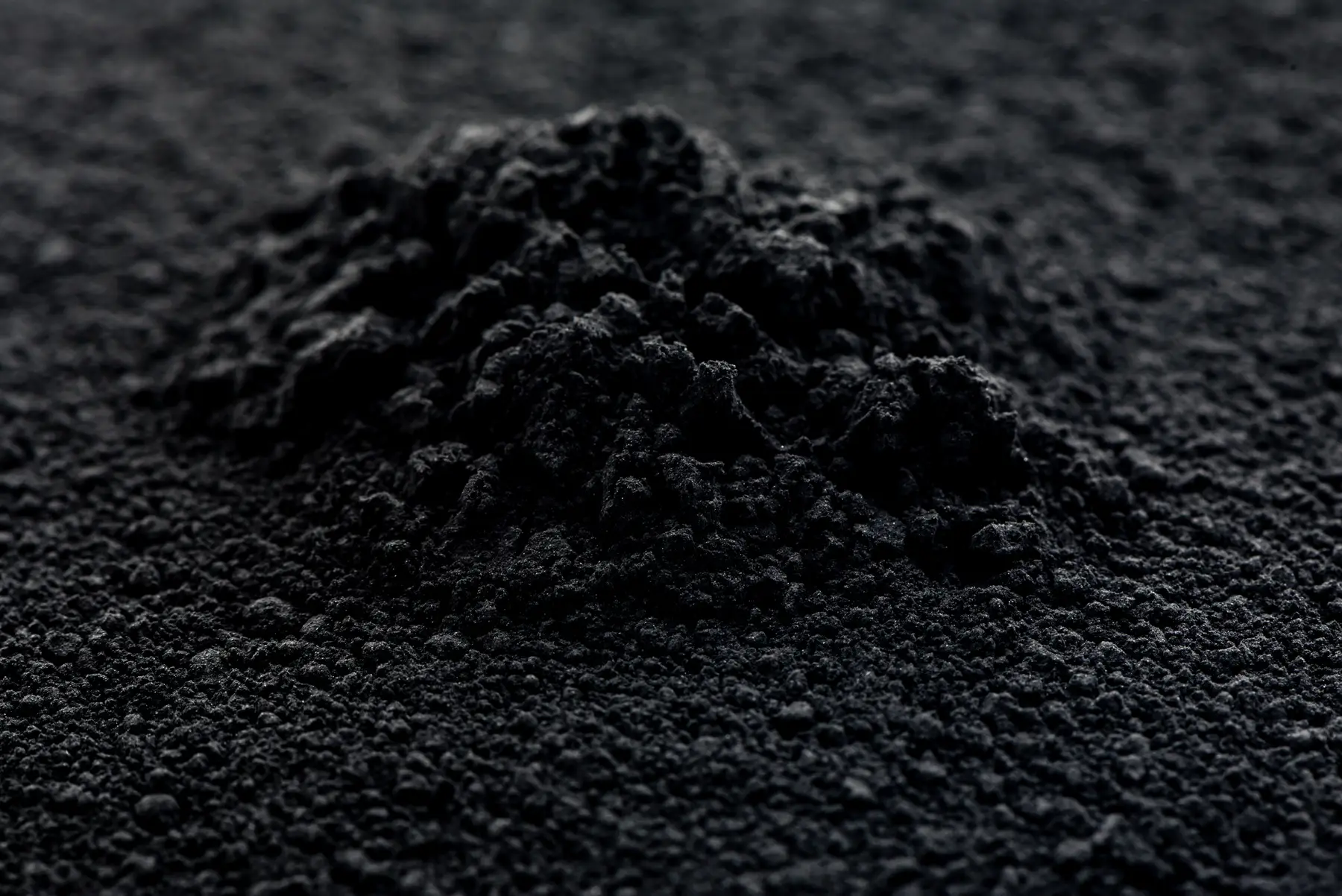
NACOA BioChar Wood is a single-origin, traceable biochar — a drop-in replacement for traditional industrial activated charcoal (same INCI: Charcoal Powder, CAS 7440-44-0) in cosmetic color and rinse-off applications, with the provenance, documentation and supply security commodity carbon cannot offer.
The problem
Most charcoal in cosmetic supply chains cannot tell you where it came from.
Commodity charcoal is bought by the kilogram from origins that are rarely disclosed and seldom documented lot by lot. For a formulator that is a sourcing risk; for a brand it is a claim that cannot be substantiated.
NACOA starts from one plantation feedstock, one producer and one documentation set, so the story on the label survives a supplier audit.

Why NACOA
Same identity on the label.
Different evidence behind it.
No label change
Same INCI (Charcoal Powder) and CAS (7440-44-0) as the charcoal it replaces. Switching does not alter ingredient declarations.
Single origin
Plantation-grown Acacia mangium converted by thermal pyrolysis in Bonao, Dominican Republic. Every lot traces to one feedstock and one site.
Documented by third parties
Microbiology, heavy metals and surface area tested by independent laboratories, with COA, SDS and TDS supplied for every evaluation.
Where it works
Built for color and rinse-off.
Independent formulator trials in 2025 placed NACOA in the categories where charcoal is used for shade and aesthetics. Cold-process soap trials have been run at a certified US contract manufacturer.
Scope: NACOA is positioned for color, aesthetic and rinse-off functions. It is not offered for formulas whose claims depend on adsorption performance.
Evidence
Numbers with a laboratory behind them.
Full results, methods and lot references are in the COA, SDS and TDS supplied with every sample kit.
Carbon
Carbon-sequestering by process.
Pyrolysis converts plantation biomass into stable solid carbon. Choosing a biochar made this way keeps that carbon in a durable form instead of returning it to the atmosphere through combustion or decay.
For the brands we supply, provenance and sustainability are part of the ingredient specification, documented with the same discipline as the lab data.
Evaluate it in your own base.
Sample kits ship with the COA, SDS and TDS. Tell us the application and we will send the material and documentation your R&D team needs.